Books

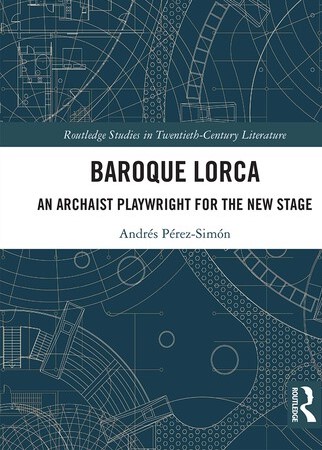
Baroque Lorca: An Archaist Playwright for the New Stage. New York: Routledge, 2020.

This book defines Federico García Lorca’s trajectory in the theater as a lifelong search for an audience. It studies a wide range of dramatic writings that Lorca created for the theater, in direct response to the conditions of his contemporary industry, and situates the theory and praxis of his theatrical reform in dialogue with other modernist renovators of the stage (Gordon Craig, Pirandello, Artaud). The book places special emphasis on how Lorca engaged with the tradition of Spanish Baroque (Calderón, Cervantes) in order to break away from the conventions of the illusionist stage and, ultimately, arrive at an intersection of ritual and theater that would involve the audience in an experience of collective atonement. The five chapters of the book analyze Lorca’s different attempts to change the dynamics of the Spanish stage from 1920 to his assassination in 1936, at the age of 38: his initial incursions into the arenas of symbolist and historical drama (The Butterfly’s Evil Spell, Mariana Pineda); his interest in puppetry throughout the 1920s (The Billy-Club Puppets and In the Frame of Don Cristóbal, and the two ‘human’ farces The Shoemaker’s Prodigious Wife and The Love of Don Perlimplín and Belisa in the Garden); the central piece in his project of ‘impossible’ theater (The Public); his final access to the commercial stage by adopting and altering the generic formula of ‘rural drama’ (Blood Wedding, Yerma and The House of Bernarda Alba); and his last and most explicitly political play, one that takes violence to the spectators’ seats (The Dream of Life).

Reviewed in

  • Modern Drama 63.3 (Fall 2020): 375–377.
  • Modern Language Review 117.3 (July 2022): 512–514.
  • Anales de la literatura española contemporánea (ALEC) 47.2 (2022): 250–254.
  • Hispanic Research Journal 23.4 (2022): 357–358.
  • Letras Hispanas: Revista de literatura y de cultura 20.1 (2024). Online.

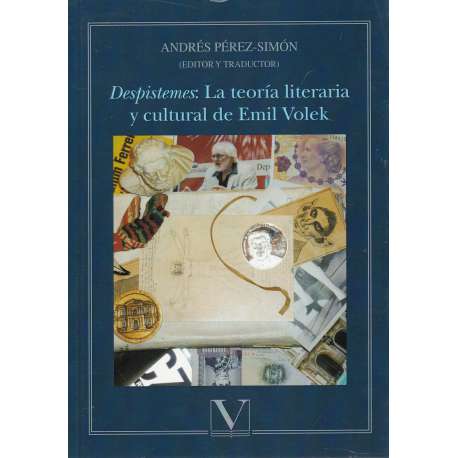
‘Despistemes’: La teoría literaria y cultural de Emil Volek (antología de textos). Madrid: Verbum, 2018.

‘Despistemes’: La teoría literaria y cultural de Emil Volek (antología de textos) is a critical edition of fifteen essays by Czech scholar Emil Volek, professor of Hispanic Literatures at Arizona State University (ASU) since 1976, on topics in the fields of Spanish cultural studies, Spanish literary history, and literary theory. Of the fifteen essays, five are my original translations from English into Spanish, two are also first translations (from Czech into Spanish, by Jarmila Jandová and Emil Volek himself) and the rest are articles originally published in Spanish-language academic journals. Besides translating five essays and editing and annotating all fifteen texts in the anthology, I have written a 60-page prologue that situates Volek’s scholarly trajectory in the context of recent debates in the field of literary theory, in particular the discussions that followed the arrival of the so-called post-structuralist theory in the American academy in the late 1960s.

Unlike other scholars who fled communist Czechoslovakia and eventually joined departments of Slavic languages in North American universities, Volek represents a unique case in view of his ability to develop and amplify the theoretical principles of the Prague School while applying them to a rich corpus of cultural artifacts pertaining to the Hispanic world. The publication of this critical anthology of his texts continues the dialogue among diverse schools of criticism that he himself has represented for years, with the particularity that this anthology specifically addresses a Spanish-speaking community of scholars.

Reviewed in

  • Tropelías 32 (2019): 280–282.
  • Literatura: Teoría, Historia, Crítica 21.2 (2019): 301–308.
  • América sin Nombre 24.2 (2020): 131–133.

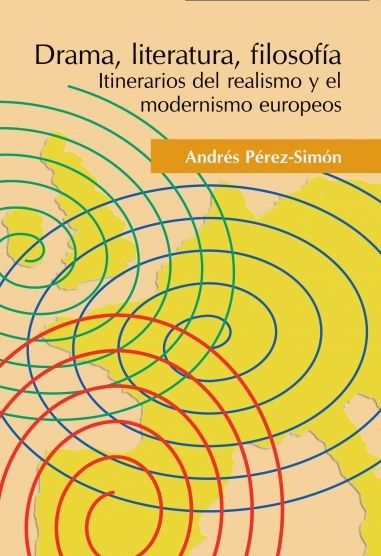
Drama, literatura, filosofía: Itinerarios del realismo y el modernismo europeos. Madrid: Fundamentos, 2015.

This monograph questions historiographical accounts traditionally based on clear-cut distinctions between literary and philosophical discourses in order to arrive at a better description of the multiple points of convergence that existed in narrative, dramatic and philosophical texts in nineteenth- and early-twentieth-century Europe.

Each of the three chapters is composed of a theoretical introduction, which establishes the methodological foundations of comparative inquiry, and two case studies. The first chapter, “Diálogo y escena dramática en la novela,” examines a varied group of authors who adopted dramatic patterns (dialogue and descriptions resembling stage directions) as a way to achieve the ideal of an impersonal art in the years of transition from realism to modernism. Benito Pérez Galdós’ novelas dialogadas and James Joyce’s dramatic epiphanies are two examples of a practice also visible in the hybrid works of R. M. del Valle-Inclán, among other contemporaries. In the second chapter, “Teatro y filosofía,” I examine a corpus of dramatic works that exhibit an uneasy yet fascinating relationship with philosophy very much in a Platonic fashion. The case studies are George Bernard Shaw and Miguel de Unamuno, two authors who saw theater as the perfect vehicle to embody their thought while also reshaping a tradition of philosophical dialogue that goes back to the Bible and Plato. Finally, the third chapter, “El drama virtual,” is concerned with a varied range of closet dramas that emerged as exuberant, dislocated narratives in the wake of Freud’s psychoanalysis. I study Gustave Flaubert’s final version of La tentation de saint Antoine and Joyce’s “Circe,” a 200-page nightmare in Ulysses.

Reviewed in

  • Anagnórisis 12 (Dec. 2015): 282–287.
  • Tropelías 25 (2016): 373–375.
  • Journal of Comparative Literature and Aesthetics 38.1-2 (2015): 132–135.
  • 452ºF. Revista de Teoría de la literatura y Literatura Comparada 15 (2016): 259–260.
  • 1616: Anuario de Literatura Comparada 7 (2017): 339–341.